
Why Cellulose Microspheres Are a Better Alternative to Microplastics
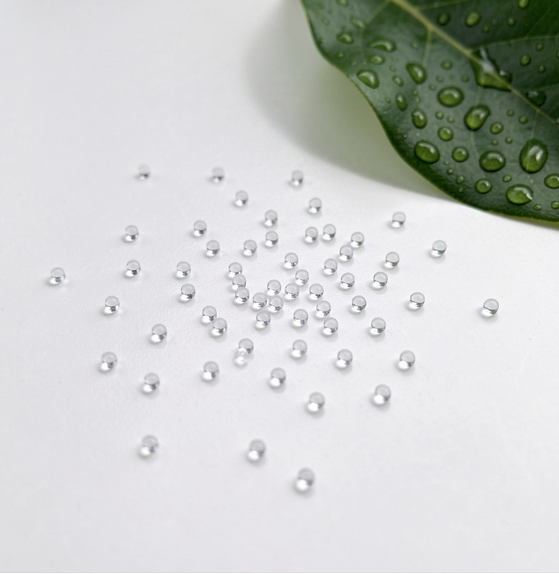
Microplastics have become a defining environmental issue. Found in oceans, soil, air, food, and even the human body, these tiny plastic particles are now recognised as a persistent and growing form of pollution (European Chemicals Agency, 2018). While awareness of the problem has increased, replacing microplastics with materials that perform just as well, without creating long-term harm, remains a challenge.
One promising solution is biodegradable microspheres made from cellulose. These materials offer the functionality industries rely on, while avoiding the environmental legacy of plastic. But biodegradable is often misunderstood. Many assume it means fragile, unstable, or short-lived. In reality, cellulose microspheres challenge that assumption entirely.
The Problem with Primary Microplastics
Microplastics are small plastic particles, primary microplastics are intentionally added to products such as cosmetics, coatings, and industrial formulations for their texture, durability, and performance. Their size, often smaller than the width of a human hair, and the fact that they do not break down makes them effective but also dangerous.
Once released into the environment, microplastics:
Do not biodegrade, adsorbing other pollutants over time
Accumulate in ecosystems, from marine environments to agricultural soils
Enter food chains, affecting wildlife and potentially human health
Persist for centuries, creating long-term environmental burden
Because they are so small, microplastics are almost impossible to recover once released. This makes prevention and replacing them at the source essential.
The Role of Cellulose Microspheres
Many industries intentionally add on (primary) microplastics to their products because they provide essential functionalities which customers expect in products. Any viable alternative must therefore meet the same practical requirements, including consistent performance, stability during storage and use, compatibility with existing formulations, and the ability to be produced at scale in a cost-effective way.
This is where cellulose biodegradable microspheres offer a compelling solution.
Cellulose microspheres are small, spherical particles made from cellulose, a natural polymer found abundantly in plants. As the most widely occurring organic matter on Earth, cellulose has a long history of safe use across multiple industries. When engineered into microspheres, cellulose can replicate many of the functional properties that made microplastics attractive in the first place, while avoiding their long-term environmental persistence. This is because cellulose is biodegradable and, at the same time, highly stable:
Rather than asking industries to compromise on performance, cellulose microspheres demonstrate that it is possible to replace microplastics with a material that delivers the required functionality, remains stable throughout a product’s lifecycle, and breaks down safely in natural environments once its purpose has been fulfilled.
Biodegradable Does Not Mean Unstable
A common misconception is that if a material is biodegradable, it must be weak, perishable, or dissolve easily. This is not the case with cellulose.
Cellulose microspheres are stable during use, storage, and throughout a product’s lifetime. They:
Maintain their structure and performance in formulations
Do not dissolve during normal use
Offer consistent texture, feel, and functionality
Can be functionalised for specific applications
The key difference lies in what happens after use.
Cellulose is biodegradable in natural environments, where microorganisms can break it down safely over time. This process does not occur instantly, nor does it compromise performance during the product’s intended use. Instead, it ensures that once released into nature, the material does not persist indefinitely like plastic.
Performance Without Persistence: A Better Material Choice
Cellulose microspheres deliver many of the same benefits that have made plastic microbeads widely used, including a smooth surface, uniform spherical shape, reliable sensory and functional performance, and compatibility with a wide range of formulations. They meet the practical demands of modern products without compromising performance.
The difference lies in their environmental impact: Unlike plastic microbeads, cellulose microspheres do not leave a permanent footprint. They remain stable and effective throughout a product’s lifecycle, yet break down safely in natural environments once released.
Replacing microplastics is therefore not about compromise, but about smarter material design. Cellulose microspheres show that high performance, stability, scalability, and environmental responsibility can coexist, offering a credible and practical route to more sustainable products.
Reference List
European Chemicals Agency (2018). Microplastics - ECHA. [online] Europa.eu. Available at: https://echa.europa.eu/hot-topics/microplastics.


Comments